Definition of Desiccant Packaging Materials:
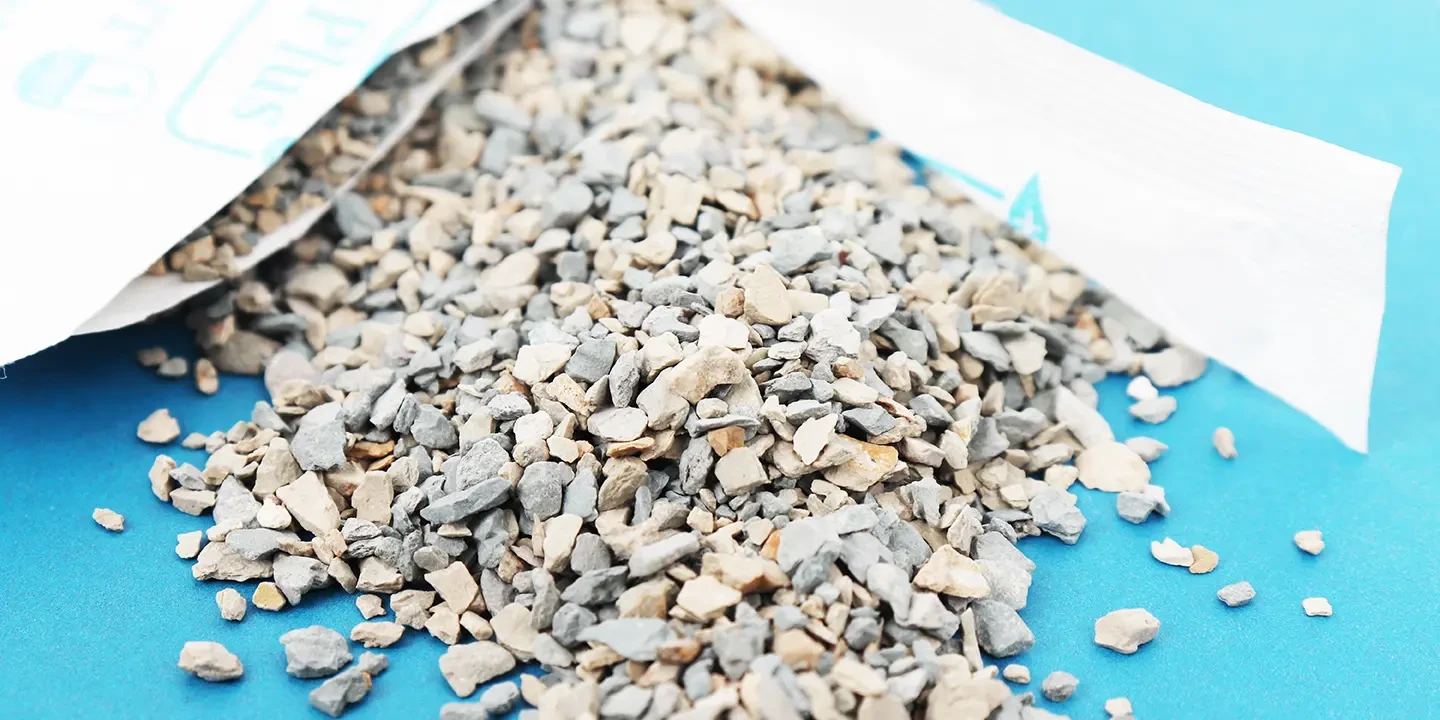
Desiccant packaging materials (often referred to as “desiccant packaging”) are functional outer materials used to encapsulate moisture-absorbing desiccant agents. They serve not only as carriers for desiccants but also directly impact moisture protection effectiveness, usage safety, and suitability for specific environments. High-quality packaging materials must ensure breathability while effectively preventing dust leakage, and must also possess mechanical strength, chemical stability, and resistance to temperature and humidity in specific conditions. Selecting the appropriate packaging material is essential to ensuring the efficient performance of desiccants.
Desiccant packaging materials come in a wide variety, each differing in strength, breathability, heat-sealing capability, dust resistance, temperature tolerance, and cost. When making a selection, in addition to ensuring effective moisture protection and content safety, it is important to consider factors such as specific application scenarios, environmental requirements, and budget constraints.
To assist you in making an informed decision, we have compiled key characteristics of some commonly used packaging materials for your reference.
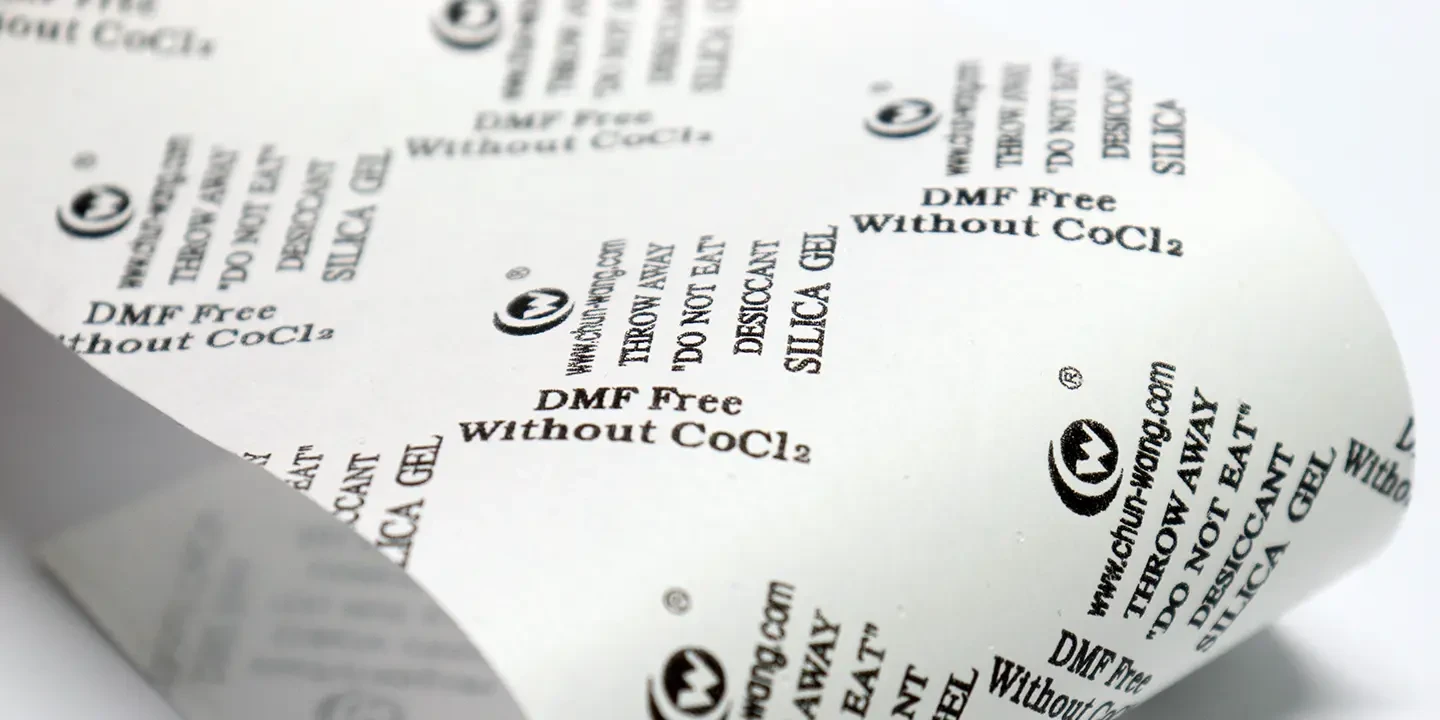
Composite Paper Packaging Features:
- Clear printing with easily recognizable warning messages, facilitating use and handling.
- Moderate breathability and firmness, suitable for general moisture-proof environments.
- Strong price advantage with high cost-effectiveness, ideal for large-volume applications.
- The most common desiccant packaging material on the market.
- Often used for packaging silica gel desiccants, activated mineral desiccants, and carbon-oxygen desiccants.
Tissue Paper Packaging Features:
- Good breathability, allowing rapid moisture penetration and absorption, but with moderate firmness.
- Cost-effective, suitable for applications sensitive to budget and requiring high breathability.
- Often used for packaging activated carbon deodorizing desiccants.
Aiwa Paper Packaging Features:
- Smooth surface with clear printing and easily identifiable warning messages.
- Semi-transparent material allows visibility of internal contents; orange indicator silica gel can be added for easy observation of color change after moisture absorption.
- Warning messages are typically printed on the inner side (reverse printing), with ink not directly contacting external products, making it safe for food and pharmaceutical packaging.
- Excellent breathability and good firmness.
- Moderately priced.
- Often used for packaging silica gel desiccants and carbon-oxygen desiccants.
Wax Paper Packaging Features:
- Smooth surface with clear printing and easily identifiable warning messages.
- Fully transparent material allows clear observation of color change; orange indicator silica gel can be added.
- Supports full-background and multi-color printing, ideal for applications requiring high aesthetic standards.
- OPP laminated with CPP material; text printed on the inner OPP layer ensures ink does not directly contact products, making it safe for food and pharmaceutical packaging.
- Moderate breathability (requires perforation for air exchange) and high firmness.
- Moderately priced.
- Often used for packaging silica gel desiccants, molecular sieve desiccants, and carbon-oxygen desiccants.
Non-Woven Fabric Packaging Features:
- Excellent breathability and good firmness.
- High flexibility, suitable for packaging desiccants of various sizes; material thickness can be adjusted based on desiccant weight.
- Moderately priced and widely applicable; commonly available on the market.
- Often used for packaging silica gel desiccants and montmorillonite desiccants.
Tyvek Packaging Features:
- High strength, lightweight, flexible, and tear-resistant.
- Excellent breathability without moisture feedback; impermeable to liquids and certain solid molecules.
- Moisture-proof, anti-static, and dust-resistant.
- Non-toxic, neutral, and mold-resistant.
- Environmentally friendly, decomposing into only carbon dioxide and water vapor upon complete combustion.
- Resistant to most acids and alkalis.
- Often used for packaging silica gel desiccants and montmorillonite desiccants.
SMS Non-Woven Fabric Packaging Features:
- Good breathability without moisture feedback and dust-resistant.
- High flexibility, suitable for packaging desiccants of various sizes.
- Compatible with ultrasonic sealing for high seal strength.
- Moderately priced and widely applicable.
- Often used for packaging montmorillonite desiccants and home deodorizing products.
Teijin Non-Woven Fabric Packaging Features:
- Teijin non-woven fabric utilizes a unique laminated expansion technology, integrating PET long fibers and PP/PE fibers into a multi-layer structure with PET on the outer surface and PP/PE on the inner surface.
- Exceptional tensile and tear strength, along with excellent breathability. It is one of the few packaging materials that can be re-dried with desiccants (at around 110°C).
- Suitable for applications requiring high strength and temperature resistance.
- Often used for packaging silica gel desiccants and montmorillonite desiccants.
Nick Paper Packaging Features:
- Durable and resistant to damage, capable of withstanding certain levels of compression.
- Heat-resistant, waterproof, and dust-resistant, with broad applicability.
- High flexibility, suitable for packaging desiccants of various sizes.
- Often used for packaging silica gel desiccants and montmorillonite desiccants.
Comparison Table of Packaging Material Characteristics:
| Packaging Material | Composite Paper | Tissue Paper | Aiwa Paper | Wax Paper | Non-woven Fabric | Tyvek | SMS Non-woven Fabric | Teijin Non-woven Fabric | Nick Paper |
| Strength | Average | Average | Good | Good | Good | Excellent | Very Good | Excellent | Very Good |
| Breathability | Average | Very Good | Very Good | Average | Very Good | Good | Excellent | Excellent | Good |
| Heat Sealability | Very Good | Very Good | Very Good | Very Good | Very Good | Average | Very Good | Average | Average |
| Dust Resistance | Average | Average | Average | Average | Average | Excellent | Excellent | Very Good | Very Good |
| High-Temperature Baking | Cannot | Cannot | Cannot | Cannot | Cannot | Cannot | Cannot | Can | Can |
| Cost | Low | Relatively Low | Moderate | Moderate | Moderate | Relatively High | Moderate | Relatively High | Relatively High |
Note: Desiccant packaging materials are diverse and not limited to the types listed above. The materials provided here are among the most commonly used. If you have specific packaging requirements, please feel free to contact us directly.