Definition of Montmorillonite:
Montmorillonite is the name of a natural mineral and is the primary mineral component of bentonite. The term “montmorillonite” originated in 1847 when A.A. Damour and D. Saluetat studied clay near Montmorillon, France, and named its principal mineral constituent. It belongs to a large group of minerals with complex chemical compositions. The International Clay Association designates “Smectite” as the group name, i.e., the montmorillonite group, which includes both dioctahedral and trioctahedral subgroups.
Montmorillonite is a natural mineral belonging to the Smectite group. Its crystal structure is unique, resembling a “sandwich” — two layers of silicon-oxygen tetrahedral sheets enclosing one layer of aluminum (or magnesium) oxygen octahedral sheets, forming a 2:1-type layered structure that contains crystalline water. This structure makes montmorillonite one of the most structurally diverse clay minerals. Scientific studies using slow-scan diffraction have confirmed that montmorillonite is a natural nanomaterial.
Montmorillonite exhibits several distinctive properties:
- Ion Exchange Capacity: It can adsorb cations from solutions, such as sodium (Na?), calcium (Ca2?), and potassium (K?) ions, and this process is reversible. In a neutral pH environment, its cation exchange capacity ranges from 70 to 140 milliequivalents per 100 grams.
- Strong Water Absorption: Montmorillonite can hold three types of water — surface free water, interlayer adsorbed water, and lattice water. Upon water absorption, its volume expands, and the interlayer spacing increases. In a highly hydrated state, its c-axis spacing can reach 1.84 to 2.14 nanometers. It can also disperse into a colloid in water. When heated, montmorillonite gradually loses water: free water evaporates first, adsorbed water is lost between 100–200°C, and lattice water is largely removed around 500°C.
- Electronegativity: Montmorillonite particles typically carry a negative charge, which directly influences their colloidal and rheological properties. This electronegativity arises from three sources: electrostatic charges from lattice substitutions, negative charges from broken bonds at crystal edges, and dissociation effects in the octahedral sheets.
Based on the types and amounts of exchangeable cations in the interlayers, montmorillonite can be classified into different types. If one cation constitutes over half of the total exchange capacity, it is named accordingly, e.g., sodium-based montmorillonite or calcium-based montmorillonite. If no single cation exceeds 50%, the two most abundant cations are used jointly for naming, e.g., calcium-sodium-based montmorillonite.
Crystal Structure of Montmorillonite:
Montmorillonite has a monoclinic crystal structure. Its lattice parameters a? and b? are relatively fixed, but c? varies with the number of interlayer water molecules and the types of exchangeable cations. When no water molecules are present in the interlayers, c? is approximately 0.960 nanometers; with water molecules, c? increases. In the octahedral layer, about one-third of aluminum ions (Al3?) are replaced by magnesium ions (Mg2?). To balance the resulting negative charge, hydrated cations (e.g., Na?, Ca2?) enter the interlayers. These cations are weakly bound to the silicon-oxygen tetrahedral sheets and can easily exchange with other cations, giving montmorillonite its excellent ion exchange capacity and c-axis expansibility.
Definition Ambiguity of Montmorillonite:
It is important to note that the definition of “montmorillonite products” is not uniform domestically, which can lead to confusion:
- In industries such as pharmaceuticals and cosmetics, montmorillonite requires high purity (over 98%), aligning more closely with the scientific definition. Products are typically analyzed qualitatively and quantitatively using methods like X-ray diffraction (XRD) to ensure toxic impurities (e.g., arsenic, mercury, lead, cristobalite) are within limits. For example, montmorillonite used in animal feed additives must be purified to ensure safety.
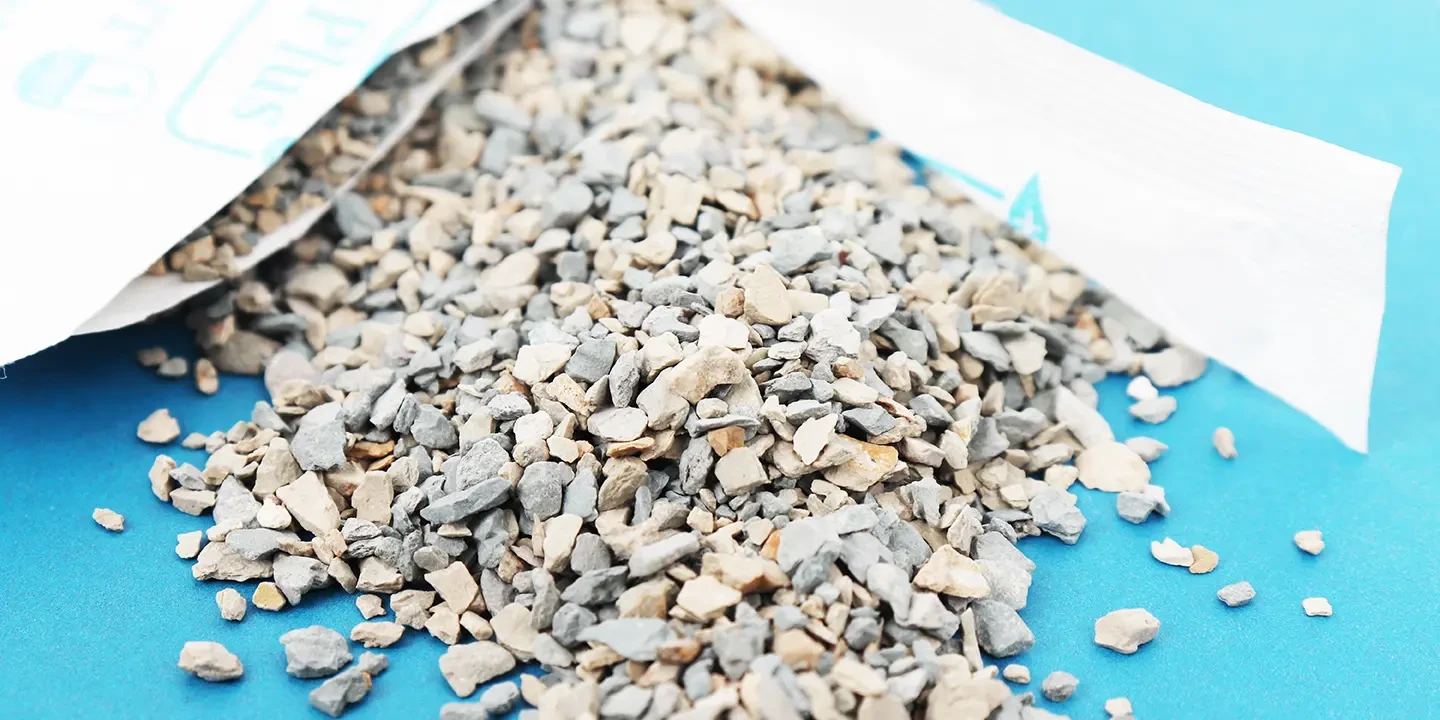
- In the non-metallic minerals industry (e.g., desiccant industry), bentonite with a montmorillonite content exceeding 80% is commonly referred to as montmorillonite, such as “montmorillonite desiccant.” These products are often assessed using methods like methylene blue absorption, essentially representing high-purity bentonite. Hence, “montmorillonite desiccant” is frequently called “bentonite desiccant.”
To distinguish between these two standards, terms like “dioctahedral montmorillonite” or “sodium montmorillonite” are often used internationally to specify high-purity, rigorously purified, and tested montmorillonite for pharmaceuticals and cosmetics, as opposed to the lower-purity montmorillonite products used primarily in industrial applications in the non-metallic minerals sector.
For detailed differences, please refer to the table below:
| Feature | Pharmaceutical/Cosmetic Industries | Non-Metallic Minerals Industry (e.g., Desiccant Industry) |
| Core Definition | True montmorillonite, concept aligns with scientific research | Bentonite clay with montmorillonite content >80% |
| Purity & Quality | High purity (≥98%) | Relatively lower purity (montmorillonite content ≥80%) |
| Primary Applications | Pharmaceuticals (e.g., montmorillonite powder), cosmetics, feed additives (purified, non-toxic) | Desiccants, cat litter, binders, wastewater treatment |
| Testing Methods | Precise methods like XRD for qualitative and quantitative analysis | Methods like methylene blue absorption for qualitative/quantitative analysis |
| Naming Conventions | Often specifically termed “dioctahedral montmorillonite” or “sodium montmorillonite” | Typically called “montmorillonite” or “bentonite” |
Differences in Montmorillonite Production Processes:
Production Process for Pharmaceuticals/Cosmetics (Focus: Purification):
- Select high-quality raw ore with minimal impurities, especially harmful heavy metals (e.g., arsenic, lead, mercury) and cristobalite (a mineral impurity harmful to lungs).
- Crush the raw ore into small pieces and preliminarily dry them.
- Utilize montmorillonite’s ability to disperse into a colloid in aqueous solution: mix crushed ore with deionized water in a specific ratio, stir thoroughly to hydrate and expand montmorillonite particles, and separate them from larger mineral grains to form a stable slurry.
- Allow the slurry to settle in large sedimentation tanks or use high-speed centrifuges to separate particles by size. Collect the upper layer rich in montmorillonite suspension and discard the bottom sediment (impurities). Repeat this step multiple times to increase purity.
- Pharmaceutical-grade products typically require sodium-based montmorillonite for better dispersion, stability, and adsorption. Add sodium agents (e.g., sodium carbonate) to the slurry, heat and stir to convert calcium-based montmorillonite to sodium-based.
- Precipitate soluble heavy metal ions into insoluble forms and remove them via centrifugation or filtration.
- Spray-dry the purified montmorillonite colloidal suspension into fine, free-flowing powder.
- Sterilize and perform post-treatment.
Production Process for Non-Metallic Minerals Industry, e.g., Montmorillonite Desiccant (Focus: Activation):
- Mine raw ore from bentonite deposits and preliminarily remove obvious impurities and waste rock.
- Crush the selected raw ore into small pieces.
- Sodium activation: Montmorillonite’s moisture absorption capacity depends on the interlayer cations. Sodium-based montmorillonite (Na-Montmorillonite) has superior moisture absorption, expansion, and dispersion compared to calcium-based (Ca-Montmorillonite). Most natural bentonite is calcium-based, so it must be “sodium-activated” to convert it to sodium-based.
- Dry the activated material in dryers (e.g., rotary kilns, belt dryers) to reduce moisture content to a low level (typically <5%).
- Grind the dried material into fine powder to achieve high surface area for faster moisture absorption. Common particle sizes range from 200 to 800 mesh.
- Process the dried montmorillonite powder into final forms (e.g., granules, blocks).
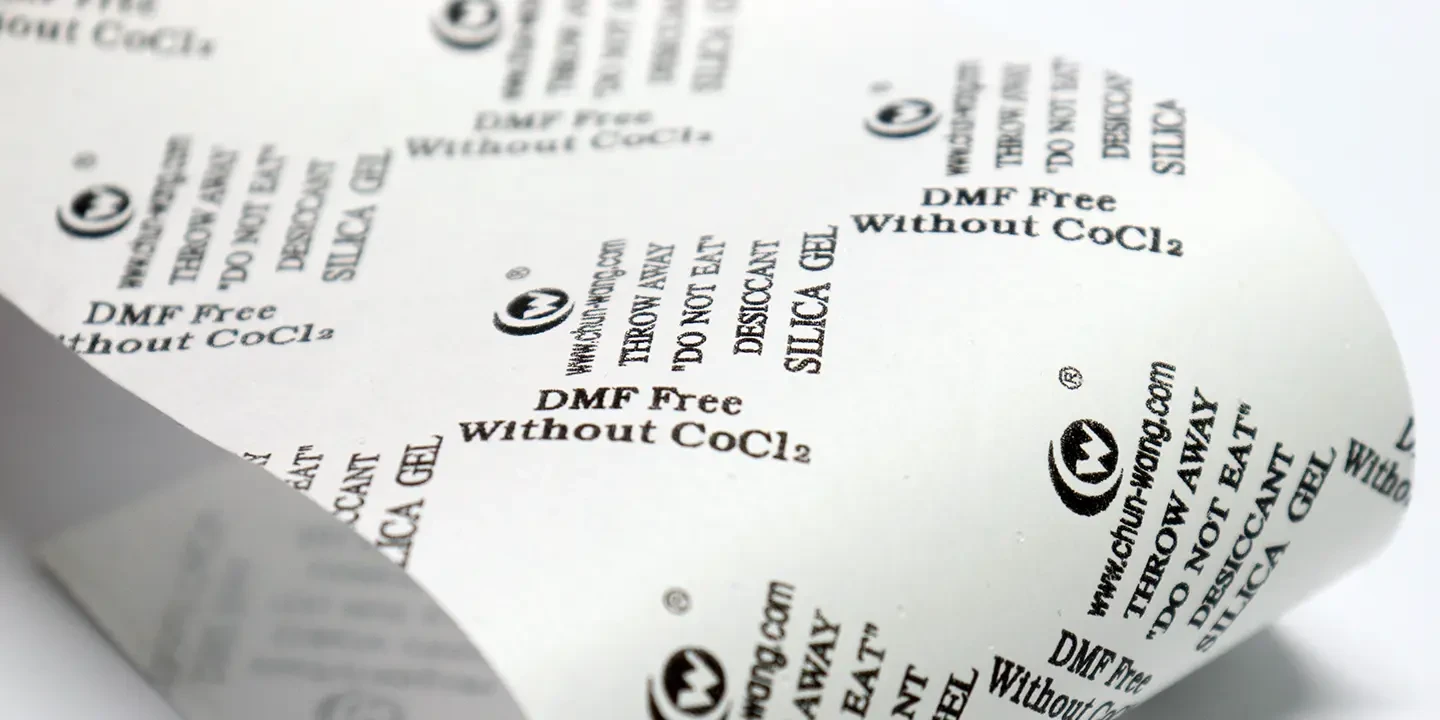
- Package the formed particles in materials with high breathability, toughness, and dust resistance (e.g., non-woven fabric, Dupont paper, textured paper) to produce the final montmorillonite desiccant.
By now, most readers should understand the differences between montmorillonite desiccants and the montmorillonite used in pharmaceutical and cosmetic industries. As a desiccant derived from nature, montmorillonite desiccant is inherently eco-friendly and biodegradable, making it increasingly recognized and purchased by global customers.